


Pfizer Oncology Together understands that getting your prescribed Pfizer Oncology medicine is at the top of your to-do list. That’s why our dedicated team offers you available resources, personalized support, and connections to financial assistance, if needed, to help you work through the challenges of access and reimbursement.
From finding financial assistance options to addressing coverage concerns, Pfizer Oncology Together is here to support you every step of the way.
Financial Assistance
If needed, we'll help you find potential financial assistance options for your prescribed Pfizer Oncology medicine, regardless of your insurance coverage. This applies to patients who are eligible and cannot afford to pay for their medicine.
Resources for eligible patients with commercial, private, employer, or state health insurance marketplace coverage:
Eligible, commercially insured patients may pay as little as $0 per month for their Pfizer Oncology treatment. Limits, terms, and conditions apply.* Patients may receive up to $10,600 per product in savings annually
The co-pay savings program provides assistance with out-of-pocket deductible, co-pay, or coinsurance costs
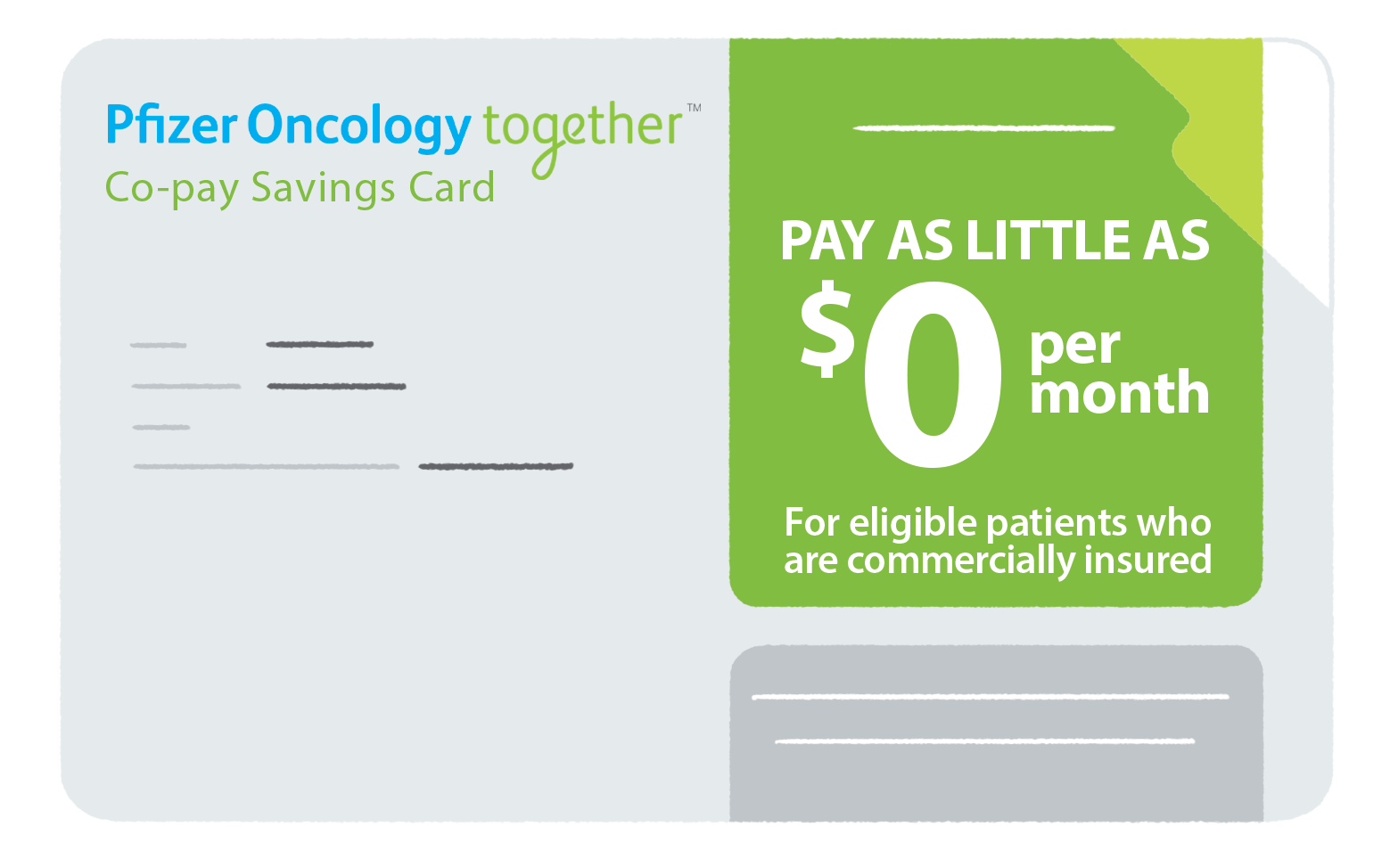
*Patients are not eligible to use this card if they are enrolled in a state or federally funded insurance program, including but not limited to Medicare, Medicaid, TRICARE, Veterans Affairs health care, a state prescription drug assistance program, or the Government Health Insurance Plan available in Puerto Rico.
Help identifying resources for eligible patients with Medicare/Medicare Part D, Medicaid, or other government insurance plans who express a financial need:
- We can assist patients with searching for financial support from alternate funding resources, which may include financial assistance through Extra Help, a Medicare Part D Low-Income Subsidy (LIS) program
- If support from alternate funding resources or Medicare Extra Help is not available, Pfizer Oncology Together will see if patients are eligible for the Pfizer Patient Assistance Program,† which can provide prescribed Pfizer Oncology medicines for free
†The Pfizer Patient Assistance Program is a joint program of Pfizer Inc. and the Pfizer Patient Assistance Foundation™. Free medicines from Pfizer are provided through the Pfizer Patient Assistance Foundation™. The Pfizer Patient Assistance Foundation™ is a separate legal entity from Pfizer Inc. with distinct legal restrictions.
Help identifying resources for eligible patients without any form of healthcare coverage:
- We can check patient eligibility for Medicaid and help them understand how to apply
- If patients do not qualify for Medicaid, they may receive their medicine for free for up to 1 year through the Pfizer Patient Assistance Program.‡ Patients must be eligible and reapply as needed
‡The Pfizer Patient Assistance Program is a joint program of Pfizer Inc. and the Pfizer Patient Assistance Foundation™. Free medicines from Pfizer are provided through the Pfizer Patient Assistance Foundation™. The Pfizer Patient Assistance Foundation™ is a separate legal entity from Pfizer Inc. with distinct legal restrictions.
Personalized Field Reimbursement Director (FRD) Support for Patients
If you’re prescribed a Pfizer Oncology medicine, you can get personalized support from a Field Reimbursement Director (FRD) at every step of your treatment. These experts are here to answer your questions and connect you with helpful resources and organizations.§ Once you are signed up, an FRD will work with you directly.
They can help you by:
- Providing educational resources on insurance topics, financial literacy, benefits, and coverage, along with topics such as wellness, nutrition, workplace transition, and caregiver support
- Connecting to advocacy organizations that may provide emotional support and education about their condition
- Depending on their location, providing connections to local organizations that may identify resources for logistical and practical assistance, such as transportation or lodging for treatment-related appointments
§Some services are provided through third-party organizations that operate independently and are not controlled by Pfizer. Availability of services and eligibility requirements are determined solely by these organizations. Opt-in required.

Useful Resource and Links
A diagnosis of metastatic breast cancer (MBC) can be difficult, but you don't have to face it alone. Find practical and emotional support that can help you navigate your diagnosis and treatment.
Resource

Patient Brochure
Want a comprehensive overview of TALZENNA? Download and print out this brochure.
Links
BreastCancer.org
FORCE: Facing Our Risk of Cancer Empowered
Living Beyond Breast Cancer
METAVIVOR
SHARSHERET
National Society of Genetic Counselors
These websites are neither owned nor controlled by Pfizer. Pfizer does not endorse and is not responsible for the content or services of these sites.